
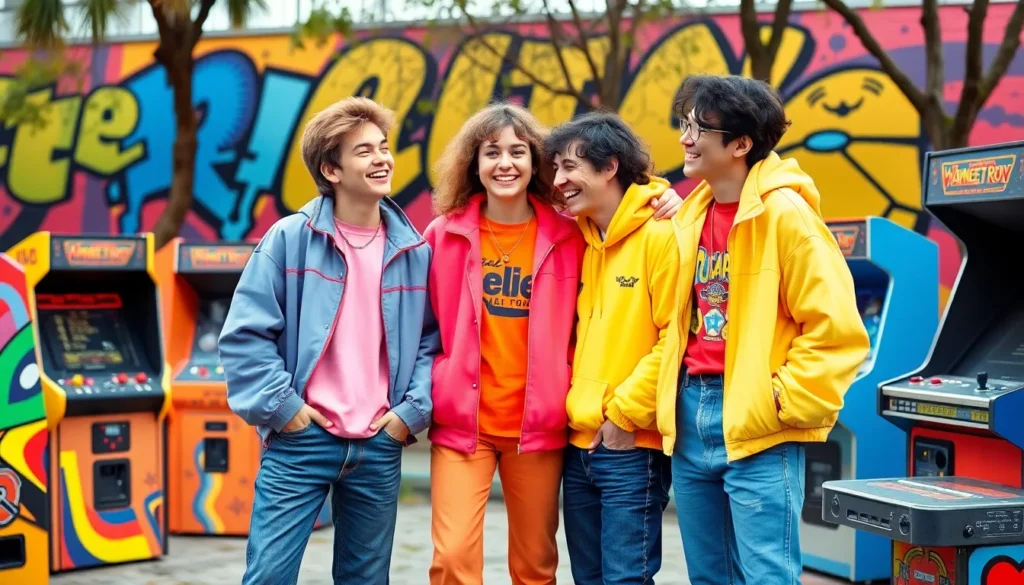

The 1980s were a vibrant explosion of color, music, and unforgettable moments that still resonate today. From neon leg warmers to cassette tapes, this decade was a playground for creativity and rebellion. If you think the 80s were just about big hair and bigger shoulder pads, think again. It was a time when pop culture shaped society, and trends emerged faster than you could say “Totally tubular!”
Overview Of Pop Culture In The 80s
Pop culture in the 1980s reflected a blend of innovation and bold expression. Music genres like pop, rock, and hip-hop surged, with artists such as Madonna, Michael Jackson, and Prince dominating the charts. Blockbuster films became a staple, delivering iconic titles like “Back to the Future,” “E.T.,” and “The Breakfast Club,” which shaped cinematic expectations.
Television also experienced a transformation. Popular shows like “Cheers,” “The Cosby Show,” and “Miami Vice” engaged audiences with diverse themes and memorable characters. Video games entered mainstream culture during this decade, introducing arcade hits like Pac-Man and home consoles like the Nintendo Entertainment System.
Fashion in the 80s embraced vibrancy and uniqueness. Neon colors, leg warmers, and oversized silhouettes defined a generation, creating a visual representation of the era’s exuberance. Trends emerged rapidly, often fueled by celebrity influences, making styles short-lived yet impactful.
Cultural movements resonated throughout society. The rise of MTV in 1981 revolutionized how music was consumed, blending visuals with sound. This surge in audiovisual media contributed to a greater focus on celebrity culture, with stars becoming iconic personalities. Social issues surfaced in popular narratives, addressing topics like race, gender, and inequality.
During this decade, youth culture flourished. Skateboarding, punk, and hip-hop emerged as significant subcultures, shaping social dynamics. The transition from traditional to digital platforms facilitated new forms of expression, fostering creativity among young people.
Overall, the 1980s marked a pivotal era in shaping modern pop culture. Its lasting influence remains visible in today’s music, film, and fashion trends, reflecting a vibrant time of creativity and change.
Key Trends In 80s Entertainment
The 1980s showcased transformative trends across entertainment. Various genres, themes, and innovative approaches emerged, shaping pop culture’s trajectory.
Movies That Defined A Decade
Blockbusters defined the cinematic experience in the 1980s. Films like “Back to the Future,” “E.T.,” and “The Breakfast Club” attracted massive audiences and left lasting impressions. Each film introduced unique narratives that resonated with viewers, reflecting youth issues and adventure fantasies. Director Steven Spielberg and writer John Hughes became influential figures, shaping the decade’s film landscape. Iconic quotes and memorable characters from these films continue to influence contemporary media, demonstrating their enduring appeal.
Iconic TV Shows
Television in the 80s experienced a golden era with beloved shows capturing audiences. “Cheers,” “The Cosby Show,” and “Miami Vice” represented the diverse landscape of programming. These shows tackled social issues while blending humor and drama, engaging viewers with relatable characters. “The Cosby Show” particularly emphasized family dynamics and cultural representation, while “Miami Vice” redefined the crime drama genre. Each series contributed to discussions on race, class, and relationships, highlighting the decade’s evolving societal norms.
Music That Shaped The Era
Music thrived in the 1980s, characterized by groundbreaking artists and new genres. Icons like Madonna, Michael Jackson, and Prince dominated the charts, influencing fashion and cultural movements. Music videos became essential, especially with the rise of MTV, transforming how artists connected with their audiences. The introduction of hip-hop brought fresh energy and cultural relevance, with legends like Run-D.M.C. paving the way. Each song and style reflected the decade’s spirit of innovation and self-expression, leaving an indelible mark on the music industry.
Fashion And Style In The 80s
Fashion in the 1980s showcased bold colors and eclectic styles, leaving a lasting impact on the cultural landscape. Trends from this era reflect a unique blend of creativity and individuality.
Iconic Fashion Trends
Bright neon colors defined streetwear, with many sporting oversized shirts, acid-wash jeans, and parachute pants. Accessories like scrunchies and fingerless gloves became staples, complementing the vibrant looks. Iconic outfits, such as Madonna’s lace gloves and Prince’s frilled shirts, set new standards. Athleisure emerged with items like tracksuits and leg warmers, blending functionality and style. Many embraced punk influences, with leather jackets and combat boots making a strong statement.
Influence Of Celebrity Culture
Celebrities greatly shaped 80s fashion trends, often serving as trendsetters. Madonna’s ever-changing style influenced countless fans, while Michael Jackson’s military jackets and single white glove captured attention. Television stars and musicians alike had fans emulating their looks, creating lasting impressions on personal style. Fashion icons sparked trends, making designer brands more accessible to the general public. The age of MTV further amplified celebrity influence, as music videos showcased unforgettable styles and aesthetic choices.
The Role Of Technology In 80s Pop Culture
Technology during the 1980s significantly shifted pop culture, impacting music and gaming in transformative ways.
Advancements In Music Technology
Innovations in music technology revolutionized how artists created and distributed music. The introduction of synthesizers allowed musicians to experiment with new sounds, leading to iconic tracks across genres. Roland’s TR-808 drum machine became a staple for hip-hop and electronic music. MTV’s launch in 1981 further amplified music consumption, showcasing music videos that highlighted artistry and visuals. The rise of the cassette tape changed how people listened to music, making it portable and accessible. Retail sales for cassette tapes surged, dominating the market throughout the decade. These advancements ensured that music reached wider audiences and shaped popular culture in dynamic ways.
Rise Of Video Games
The 1980s marked a significant turning point for video games, establishing them as a mainstream form of entertainment. The launch of the Nintendo Entertainment System in 1985 propelled gaming into households, creating a new cultural phenomenon. Iconic franchises like Super Mario Bros. captured imaginations, contributing to a billion-dollar industry. Arcade games also thrived, with classics like Pac-Man and Space Invaders drawing crowds. Gaming centers became social hubs for youth, fostering community engagement. As games evolved, they incorporated storytelling and graphics, reshaping entertainment experiences and leaving a lasting impact on pop culture.
The 1980s stand as a testament to creativity and cultural evolution. This vibrant decade reshaped music film and fashion in ways that continue to resonate today. From the rise of iconic artists to groundbreaking cinematic experiences the influence of this era is undeniable.
Pop culture in the 80s fostered a spirit of innovation that inspired future generations. The unique blend of bold styles and diverse musical genres created a rich tapestry that defined youth culture. As technology advanced it opened new avenues for artistic expression and social commentary.
The legacy of the 1980s remains a powerful force in contemporary culture reminding us of a time when individuality and creativity flourished.


