
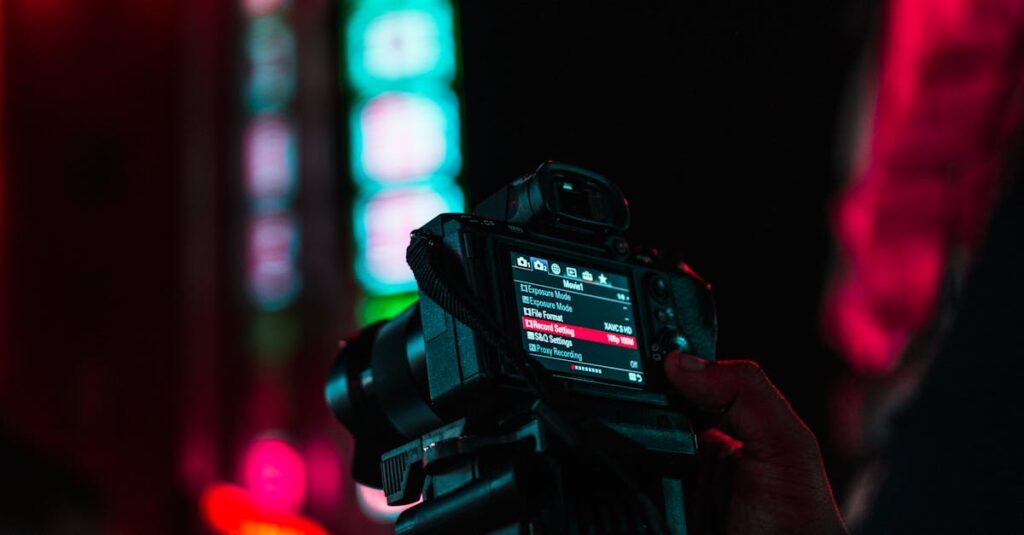

As the sun dips below the horizon and the stars begin to twinkle, a whole new world of photography comes alive. Night photography isn’t just about capturing the moonlit landscape; it’s an adventure that requires the right gear to transform those dark, shadowy scenes into stunning masterpieces. But fear not, aspiring night owl photographers—it’s not as daunting as it sounds!
Table of Contents
ToggleEssential Gear For Night Photography
Capturing stunning night scenes requires specific gear. With the right equipment, photographers can enhance their night photography experience and achieve exceptional results.
Camera Bodies
Full-frame sensors capture more light, making them suitable for low-light conditions. Model options like the Canon EOS 6D and Nikon D750 offer excellent performance in the dark. Mirrorless cameras provide similar benefits with compact designs, such as the Sony A7 series. DSLRs typically excel with larger lenses which can gather more light, ensuring sharper images. For optimal performance, a camera body with high ISO sensitivity and low noise levels is crucial.
Lenses
Fast lenses feature wider apertures for improved light intake, making them ideal for night photography. Prime lenses such as the 50mm f/1.8 or 24mm f/1.4 are popular choices among photographers. Zoom lenses like the 24-70mm f/2.8 offer versatility for different shooting scenarios. Additionally, lenses with image stabilization can reduce blur, enhancing shot quality. Selecting a lens with a wide field of view allows for capturing expansive night landscapes.
Tripods
A sturdy tripod eliminates camera shake, which is vital for long exposure shots. Models like the Manfrotto Befree and Gitzo Traveler series are lightweight yet stable. Adjustable height and leg angles provide versatility in various environments. For increased stability, tripods with hook attachments can be weighted down. Ensuring the tripod has quick-release plates simplifies lens changes and adjustments during shoots.
Accessories To Consider
Accessories enhance night photography, improving functionality and convenience. Here are some essential tools to consider.
Remote Shutter Releases
Remote shutter releases minimize camera shake during long exposures. By using these devices, photographers capture crisp images without the risk of movement. Different models include wired and wireless options, offering flexibility in shooting positions. Many remote releases feature timers or interval settings, allowing for bulb exposures and time-lapse photography. Brands like Canon and Nikon provide compatible remotes, while third-party manufacturers, such as Vello, offer additional choices. Incorporating a remote shutter release makes a noticeable difference in clarity and stability in night shots.
Flashlights and Headlamps
Flashlights and headlamps aid in navigating dark shooting environments. Bright, adjustable beams illuminate areas and help set up equipment effectively. When selecting a torch, features like brightness levels and beam patterns matter; LED varieties usually offer the best performance. A headlamp keeps hands free, ideal for setting compositions or adjusting camera settings without hassle. Choosing a waterproof or weather-resistant model ensures reliability in various conditions. Brands such as Petzl and Fenix provide durable options, making these accessories fundamental for successful night photography.
Tips For Using Gear Effectively
Effectively using gear in night photography maximizes results and enhances the overall experience. Proper techniques and settings lead to stunning images in low-light environments.
Shoot in Manual Mode
Manual mode offers complete control over camera settings. Adjusting shutter speed, aperture, and ISO provides flexibility for various lighting conditions. Utilizing slow shutter speeds captures more light, while wider apertures allow optimal light intake. Experimenting with settings isn’t just beneficial; it’s essential for amazing night shots. Previewing images after captures helps refine adjustments for future shots. Ultimately, manual mode empowers photographers to achieve their desired artistic vision.
Use High ISO Settings
High ISO settings enable cameras to capture images in lower light. Increasing ISO allows for faster shutter speeds, reducing motion blur in night photography. Balancing ISO with noise levels remains important. Cameras with superior performance at high ISO produce cleaner images. Testing different ISO levels showcases the relationship between noise and light capture. Choosing the right ISO setting dramatically impacts final image quality and can make a night scene truly pop.
Popular Brands and Models
Night photography gear varies by brand and model, offering diverse options that cater to different preferences. Knowing which brands excel can streamline the decision-making process.
Recommended Cameras
Canon and Nikon stand out for full-frame camera options. The Canon EOS 6D and Nikon D750 excel in low-light situations, capturing beautiful images under challenging conditions. Mirrorless cameras from the Sony A7 series also remain popular, providing compact designs that enhance portability without sacrificing performance. Fujifilm X-T4 has gained attention for its impressive low-light capabilities as well, making it another solid choice. Users benefit from selecting cameras that suit their shooting style and deliver exceptional results.
Best Lenses
Wide-aperture lenses play a crucial role in night photography. Prime lenses like the 50mm f/1.8 and 24mm f/1.4 allow for maximum light intake, improving overall image quality. Versatile zoom lenses such as the 24-70mm f/2.8 provide flexibility for various compositions. Tamron and Sigma also produce high-quality lenses that compete with major brands, offering affordable alternatives without compromising quality. Selecting lenses that work effectively in low-light settings can elevate night photography experiences.
Night photography opens up a world of creative possibilities for photographers. With the right gear and techniques, capturing stunning images in low-light conditions becomes an achievable goal. High-quality cameras and fast lenses are essential for maximizing light intake and achieving clarity in dark scenes.
Investing in sturdy tripods and useful accessories like remote shutter releases and reliable lighting tools can further enhance the experience. By mastering manual settings and understanding the interplay between ISO, shutter speed, and aperture, photographers can elevate their night photography skills. Embracing these elements will lead to breathtaking nighttime images that showcase the beauty of the dark.


